The moka pot is much more than a coffee maker: it is the first scent of the morning in countless Italian homes, the gurgle that tells you the coffee is ready. Yet precisely because we use it every day, we tend to make it on autopilot, repeating small mistakes that strip away aroma and leave a bitter or burnt taste in the cup. In this guide we take you through it step by step, from the water to the flame, so you can make a truly good moka coffee: the same familiar routine, just with a little more care.
Before you start: a clean pot and the right coffee
A good moka starts with a well-kept pot. Rinse it with hot water only, without harsh detergents that can leave odours behind, and let it dry properly before putting it back together. Check the gasket and filter every so often: if the gasket has hardened or the filter is clogged, the pressure is not evenly distributed and the extraction suffers.
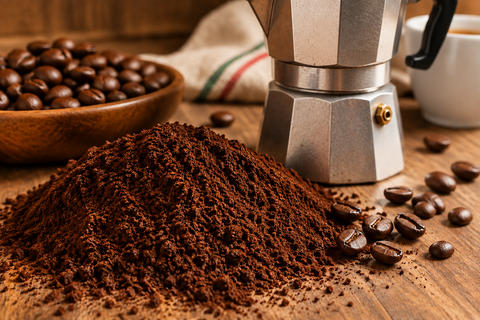
Then there is the coffee. A moka needs a medium grind, coarser than for espresso: if it is too fine, the water struggles to pass through and the coffee turns bitter. If you love a full, bold flavour, our Gran Crema ground coffee is made precisely for moka and espresso, with notes of chocolate and nuts. If you prefer a sweeter, rounder cup, try Poesia ground coffee in a tin, which is easy to close tightly after each use.
Step by step
- Water in the base. Fill the bottom chamber with fresh water up to the safety valve, never above it. Many people prefer to use water that is already warm: it shortens the time on the hob and reduces the risk of the coffee in the filter "cooking" before extraction. If you do, handle the pot with a cloth.
- Coffee in the filter, without tamping. Pour the ground coffee into the funnel up to the rim, forming a small mound, then level it gently. Do not press it down: compacted coffee blocks the water and leads to a bitter, uneven extraction.
- Clean the rim. Wipe away any grounds left on the edge of the base so the gasket seals properly.
- Screw it together firmly. Close the pot while holding it upright, without over-tightening.
- Low heat. Place the moka on a low flame and, if you can, on the smallest burner: the flame should never lick up the sides of the base. A slow rise gives a rounder, less bitter coffee.
- Lid open. Leaving it up lets you watch the coffee rise: it should flow out slowly, dark and dense.
When to take the moka off the heat
This is the most important moment, and the most overlooked. As soon as the coffee coming out turns lighter and the familiar gurgling begins, take the moka off the heat. That last part of the extraction is the most watery and bitter: letting it run on, especially over a high flame, puts burnt notes in your cup. A little trick from tradition: rest the base of the pot briefly on a cold, damp cloth and the extraction stops straight away.
Before pouring, stir the coffee in the upper chamber with a teaspoon. The first part to rise is more concentrated, the last part lighter: stirring gives you a balanced cup that tastes the same for everyone.
The most common mistakes
- Filling the water above the valve: it is unsafe and spoils the extraction.
- Tamping the coffee: it seems to add body, but it only adds bitterness.
- A high flame to speed things up: the coffee rushes up, over-extracted and burnt.
- Waiting for the gurgling to finish: the last drops ruin the rest of the cup.
- Using poorly stored coffee: a pack left open for weeks next to the hob loses its aroma. Seal it well and keep it somewhere cool and dry.
- Putting the moka in the dishwasher: aluminium pots in particular oxidise and hold on to unpleasant smells.
A question of size
A moka works best when used at its full capacity: a six-cup pot filled halfway does not perform well. If you often make coffee for just one or two people, it is worth having a smaller pot too. In the same way, the right amount of coffee is whatever fills the filter: no need to add more or take any away. If you would like to try different flavours, our range of ground coffee includes several blends, all suited to the moka.
With these simple tips, your everyday moka becomes a small ritual to enjoy at your own pace. Since 1979, at our artisan roastery in the Langhe, we have roasted and selected our coffee with this daily moment in mind: choose your favourite blend and taste the difference.